 Posted by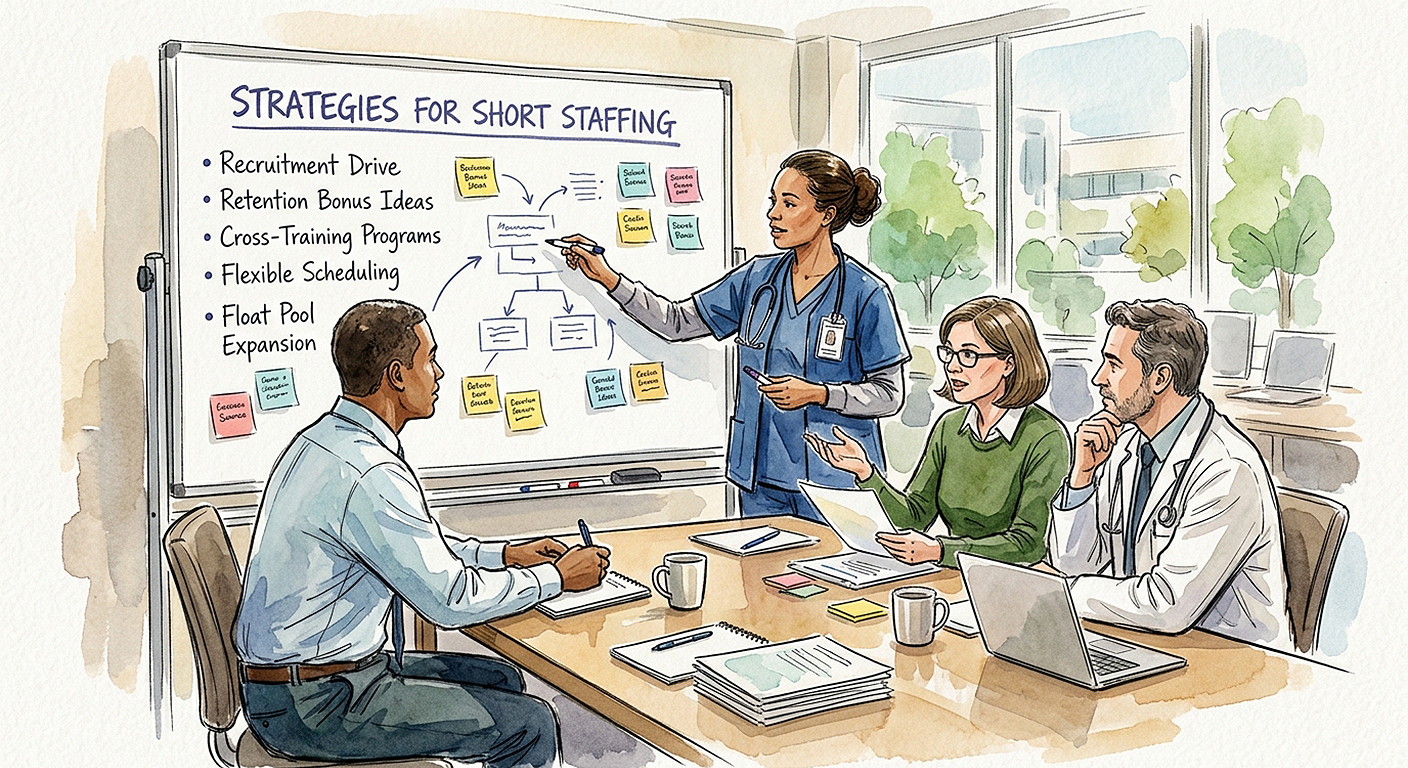
Healthcare organizations are facing a workforce crisis that is reshaping nearly every aspect of care delivery and organizational strategy. Staffing shortages have become one of the most urgent challenges confronting hospitals, clinics, long-term care facilities, and health systems across the country. While the immediate consequences are often seen in patient care delays and overextended teams, the broader impact reaches deep into the responsibilities and decision-making processes of healthcare leaders.
For today’s executives, directors, and department managers, staffing shortages are not simply an operational inconvenience. They represent a complex leadership issue that affects financial performance, employee well-being, patient safety, organizational culture, and long-term sustainability.
As the healthcare workforce continues to evolve under mounting pressure, leaders must rethink traditional staffing strategies and develop more adaptive, resilient approaches to workforce management.
Why Staffing Shortages Have Become a Leadership Crisis
The roots of healthcare staffing shortages are multifaceted. The COVID-19 pandemic accelerated burnout and workforce fatigue across nearly every clinical discipline. Many professionals left healthcare altogether after years of emotional exhaustion, chronic understaffing, and increased workplace stress.
At the same time, an aging workforce is contributing to labor shortages as experienced nurses, physicians, respiratory therapists, and other allied health professionals approach retirement. Educational bottlenecks have further intensified the issue. Nursing schools, respiratory care programs, and other healthcare training institutions continue to face faculty shortages, limiting the number of graduates entering the workforce.
Meanwhile, patient demand is rising. Aging populations, increasing chronic disease prevalence, and growing healthcare access needs have created sustained pressure on already strained systems.
This convergence of factors has transformed staffing shortages from a temporary challenge into a long-term strategic concern.
Operational Challenges Created by Staffing Shortages
Healthcare leaders are often forced into a near-constant balancing act when staffing levels cannot keep pace with patient volume. Workforce shortages create operational disruptions that affect both efficiency and care delivery.
Many organizations have had to reduce service lines, temporarily close units, or delay elective procedures due to inadequate staffing. Emergency departments may experience prolonged wait times, inpatient units may struggle with patient throughput, and discharge processes often become delayed when staffing gaps create workflow bottlenecks.
The operational strain also drives up labor costs. Overtime expenses, premium shift pay, and reliance on contract or agency staff have become major financial burdens for healthcare organizations. Leaders must make difficult choices about budget allocation while still maintaining quality standards and workforce morale.
This operational complexity has elevated staffing strategy to a central leadership function rather than a task delegated solely to human resources or department scheduling teams.
The Relationship Between Staffing Shortages and Burnout
One of the most damaging consequences of staffing shortages is the cycle of burnout they create.
When organizations are understaffed, the burden shifts to existing employees. Clinicians are asked to work longer shifts, take on heavier patient assignments, and absorb responsibilities beyond their intended scope. Over time, this leads to emotional exhaustion, compassion fatigue, reduced job satisfaction, and increased turnover.
This creates a self-perpetuating problem. Staffing shortages increase burnout, burnout drives resignations, and resignations worsen staffing shortages.
Healthcare leaders can no longer afford to view burnout as an individual resilience issue. It is a systemic leadership challenge that requires structural solutions.
Organizations that fail to address workforce fatigue often experience escalating turnover, absenteeism, and recruitment costs.
Patient Safety and Quality of Care at Risk
The connection between staffing shortages and patient outcomes is well documented. Inadequate staffing levels are associated with increased medical errors, delayed interventions, patient falls, reduced satisfaction scores, and higher rates of readmission.
When staff are stretched beyond safe or sustainable levels, attention to detail can decline. Communication errors become more likely, documentation delays increase, and clinical decision-making may be compromised by fatigue.
Healthcare leaders carry the responsibility of protecting quality and safety, even in environments where staffing constraints create significant limitations.
This often requires leaders to redesign workflows, optimize care models, and identify opportunities for technology integration that can reduce inefficiencies without compromising patient care.
Financial Implications for Healthcare Organizations
Staffing shortages are also reshaping financial leadership in healthcare.
Labor costs have become one of the most volatile components of healthcare budgets. Premium pay, agency contracts, onboarding expenses, and turnover-related costs can rapidly erode operating margins.
At the same time, staffing shortages can reduce organizational revenue. Limited workforce capacity may force organizations to restrict admissions, reduce surgical schedules, or temporarily close units, directly affecting reimbursement opportunities.
Leaders are increasingly forced to balance short-term financial realities with long-term workforce investments.
While reducing labor expenses may seem like an immediate solution, underinvesting in workforce retention and support often creates far greater long-term costs.
How Healthcare Leaders Can Respond Strategically
The most effective leaders are moving beyond reactive staffing tactics and adopting more comprehensive workforce strategies.
Retention has become a major priority. Replacing experienced clinicians is expensive and disruptive, making employee retention one of the highest-return workforce investments available.
Organizations focused on retention are strengthening compensation structures, offering clearer career advancement pathways, improving scheduling flexibility, and expanding leadership development opportunities.
Employee well-being must also become a strategic priority. Leaders who actively address burnout through workload assessment, administrative simplification, mental health resources, and supportive scheduling practices are better positioned to stabilize their workforce.
Technology is playing an increasingly important role in staffing strategy as well. Predictive analytics, automated scheduling systems, virtual care models, and documentation tools can reduce inefficiencies and relieve some administrative burden from clinical teams.
Digital transformation is no longer simply an IT initiative. In many organizations, it has become a workforce sustainability strategy.
Organizational Culture as a Competitive Advantage
Culture has become one of the most important factors influencing retention and workforce stability.
Healthcare professionals are increasingly evaluating organizations based not only on compensation, but also on leadership transparency, team dynamics, psychological safety, and workplace respect.
Leaders who create environments where staff feel heard, valued, and supported are more likely to retain talent during periods of industry-wide instability.
Clear communication, inclusive decision-making, and visible leadership presence can significantly improve trust and engagement.
In a highly competitive labor market, culture is no longer a secondary concern. It is a differentiator.
The Future of Healthcare Leadership in a Workforce-Constrained Environment
Staffing shortages are likely to remain a defining issue in healthcare for years to come. Demographic shifts, workforce attrition, and rising patient demand suggest these pressures will continue well into the future.
As a result, the role of healthcare leadership is evolving.
Today’s leaders must function as workforce strategists, change managers, culture builders, and advocates for staff sustainability. The ability to navigate complexity, manage uncertainty, and lead through workforce disruption has become a defining competency.
Organizations that succeed will be led by individuals who understand that staffing shortages are not isolated operational issues, but central drivers of organizational performance, workforce health, and patient outcomes.
Conclusion
Staffing shortages have fundamentally altered the healthcare leadership landscape. What was once viewed as a staffing or recruitment issue has become a far-reaching strategic challenge with operational, financial, clinical, and cultural implications.
Healthcare leaders must now make workforce sustainability a core organizational priority. This requires more than filling vacancies. It requires reimagining staffing models, strengthening retention, investing in employee well-being, leveraging technology, and building cultures that support long-term workforce resilience.
While staffing shortages present undeniable challenges, they also offer healthcare leaders an opportunity to modernize workforce strategy and build stronger, more adaptive organizations prepared for the future.
The leaders who thrive in this environment will be those who recognize that workforce stability is not separate from organizational success. It is foundational to it.